
It's Not You,
It's Us.

Quest Design Quest Design Narrative Design Narrative Design Unreal Engine 5 Unreal Engine 5 Perforce Perforce Scrum Scrum Feature Ownership

INYIU

Duration ~19 Weeks
Team size 13 Developers
Unreal Engine Student Game
Play on itch.io

About

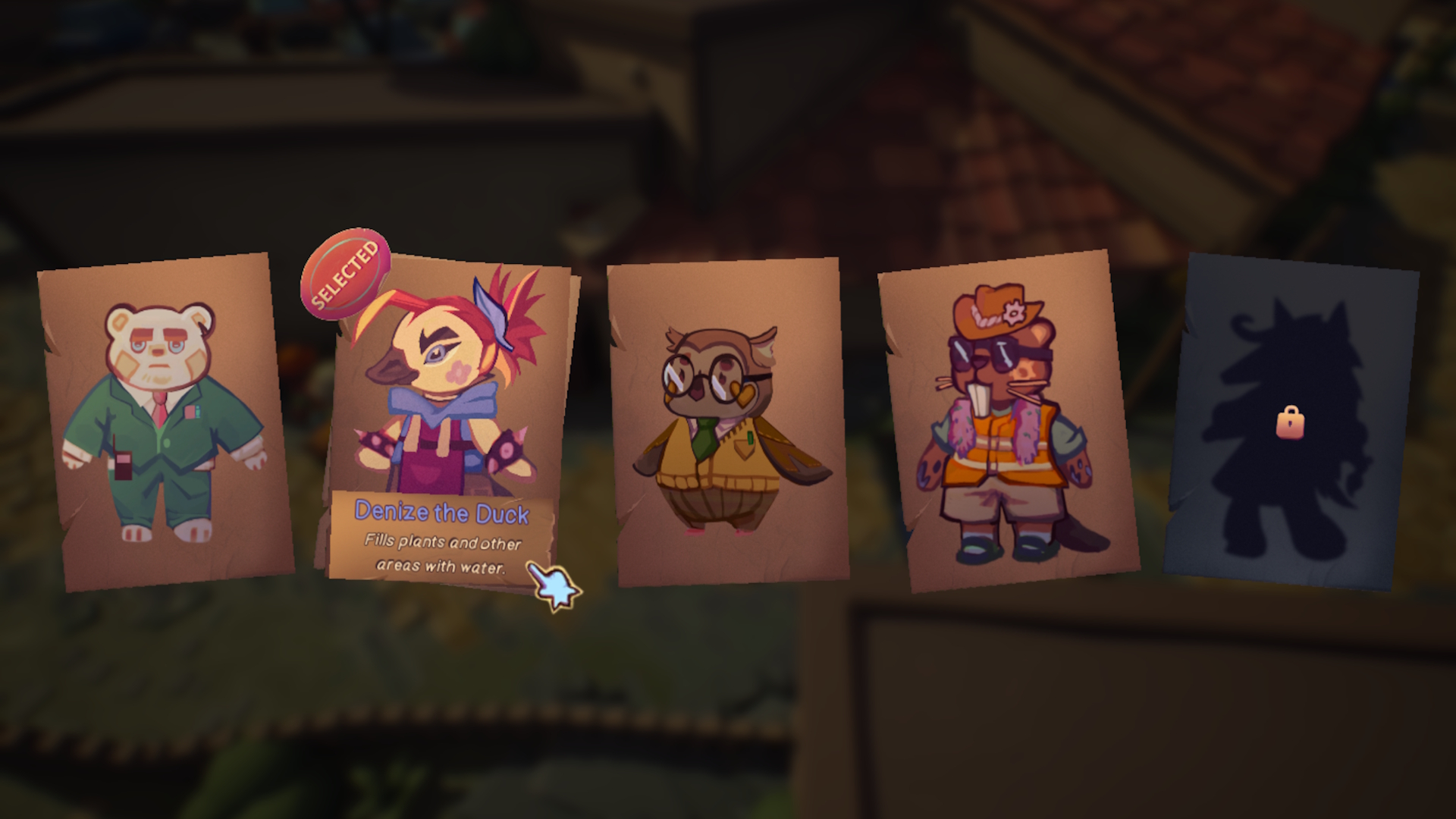
It's Not You, It's Us is a 3D point-and-click adventure about a group of animal characters coming together to make their town a better place. Explore a cozy town as you meet the Urbanimals that call it home, and discover that taking care of the environment, and each other, is something nobody can do on their own. With charming graphics and simple controls, anyone can engage and have fun in this short gameplay experience!
Responsibilities
  1. Co-created the quest system, which I used to structure the complete narrative flow of the game.
  2. Narrative systems
  3. Designed and developed in-game cinematics, delivering key narrative moments that were also repurposed for marketing trailers.
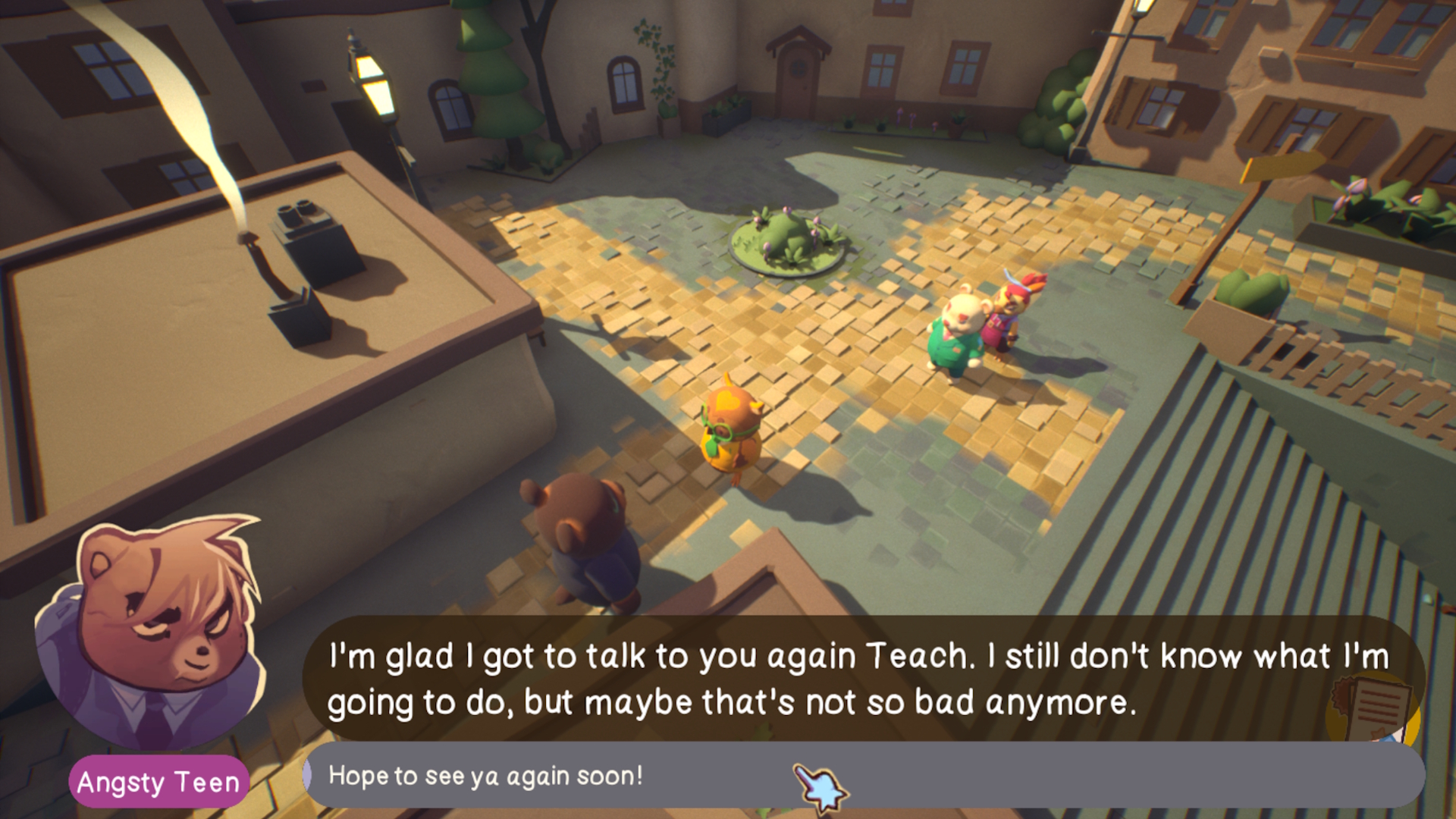
  4. Wrote the narrative content for all quests and character interactions, ensuring consistency across the full story.
  5. Served as Feature Owner for the 3Cs, overseeing their development throughout the project and personally designing camera behavior and character/NPC feel.
Character roster Narrative dialogue

Project Focus

Every project page I write zooms in on one of four quest design disciplines I work in. For INYIU, that's Narrative Design, though the other three show up along the way too.

Visual Scripting
Encounter Design
Level Design
Narrative Design

INYIU was my first real dive into Narrative Design, and I quickly learned it's about way more than dialogue. It means designing around every system and idea in the game, and constantly talking with people across every other discipline on the team. Scroll down to see how that actually played out, starting with the first boundaries we set ourselves: our pillars.

Overview

Image or video coming soon

Design Intent

My job on INYIU was to make sure every quest, interaction and character moment pushed toward one thing: making players feel like talking to each other actually mattered. Narrative design doesn't just mean writing dialogue, it means shaping systems so the story only works if people talk, listen and figure things out together. Here's how each pillar fed into that, and which disciplines I worked closely with to pull it off.

  • Work together. Every major interaction needed at least two of the Urbanimals' abilities to resolve, so narrative design meant writing quest logic that could only move forward through cooperation. That meant close collaboration with visual scripting and encounter design to make sure story beats actually required teamwork, not just suggested it.
  • One distinct ability. Since every character had exactly one defining ability, quests and dialogue had to give each of them a real moment to shine, never letting one character carry a scene alone. That meant working closely with character and visual design to keep each ability narratively meaningful, not just mechanically useful.
  • Sustainability. Environmental care had to show up in the story, not just the setting, so quests and NPC motivations tied directly back to real stewardship themes. That meant working with level design and art to make sure the world itself reflected what the narrative was saying.
  • Tested beyond gamers. Since non-gamers needed to follow the story without prior genre knowledge, dialogue and quest framing had to stay clear without feeling dumbed down. That meant working closely with playtesting and UX to catch exactly where new players got lost.
  • Light but grounded. Keeping the tone warm and funny without losing real emotional stakes meant writing dialogue that could hold both at once. That meant working closely with cinematics and audio to make sure the tone landed the same way in voice, animation and writing.
Empowerment

Leaving players feeling like there is something they can do to contribute as well.

Stimulate group conversation

Every quest is built so the Urbanimals, and the people playing together, have to actually talk to each other to get anywhere.

Work together

Characters combine to solve tasks, since no single Urbanimal gets through a puzzle alone.

One distinct ability

Every character has exactly one defining ability, so players always know who to bring and why.

Sustainability

Every system ties back to real environmental care, never just set dressing.

Tested beyond gamers

Playtested with people who don't usually play games, not just inside the studio.

Light but grounded

The tone stays warm and funny without losing sight of real feelings and real stakes.

Five pillars held up one shared goal, and that goal was all about the player experience we were chasing.

Hover a column for its pillar, or the goal bar for more on the goal · player experience stays fixed as the throughline above both

Work in progress

This project page is still under construction

Enjoy what's here for now, and come back soon to see the rest of the story.

Back to Home